
The Benefits of Supine Twist

Blisstopia Retreats • 2 January 2025

Supine Twist, or Supta Matsyendrasana, is a simple yet powerful yoga posture that offers a range of physical, mental, and energetic benefits. Whether you’re winding down after a long day or seeking a gentle way to release tension, this pose is a go-to for many practitioners.

The Benefits of Supine Twist

  1. Spinal Health and Flexibility: Supine Twist gently stretches and lengthens the spine, helping to release tension from the lower back. It promotes spinal flexibility and improves mobility, which is especially beneficial for those with sedentary lifestyles.
  2. Detoxification and Digestion: The twisting motion stimulates the abdominal organs, aiding in digestion and promoting detoxification. It’s an excellent pose for improving gut health and relieving bloating or discomfort.
  3. Stress Relief and Relaxation: As a restorative posture, Supine Twist encourages deep relaxation and soothes the nervous system. This makes it a perfect pose to incorporate at the end of your practice or before bed to support better sleep.
  4. Balanced Energy Flow: Twists are known to balance the body’s energy by engaging and harmonizing the right and left sides of the body. This pose helps clear energetic blockages and aligns you with a sense of equilibrium.

Why the Right Knee First?

When practicing Supine Twist, many yoga traditions emphasize bringing the right knee in first and twisting to the left. This sequence is intentional and rooted in the body’s natural energy flow:

  1. Alignment with Digestive Flow: Twisting to the left first aligns with the natural direction of the colon, helping to stimulate digestion and encourage detoxification. This supports the body’s elimination process more effectively.
  2. Balancing the Nadis (Energy Channels): In yoga philosophy, the body has two main energy channels, the Ida (left) and Pingala (right) nadis. Starting on the right side helps balance these channels, promoting a state of harmony and well-being.
  3. Supporting the Heart: Twisting to the left first places gentle compression on the heart area, which can stimulate circulation and promote feelings of relaxation and openness.

Tips for Practicing Supine Twist

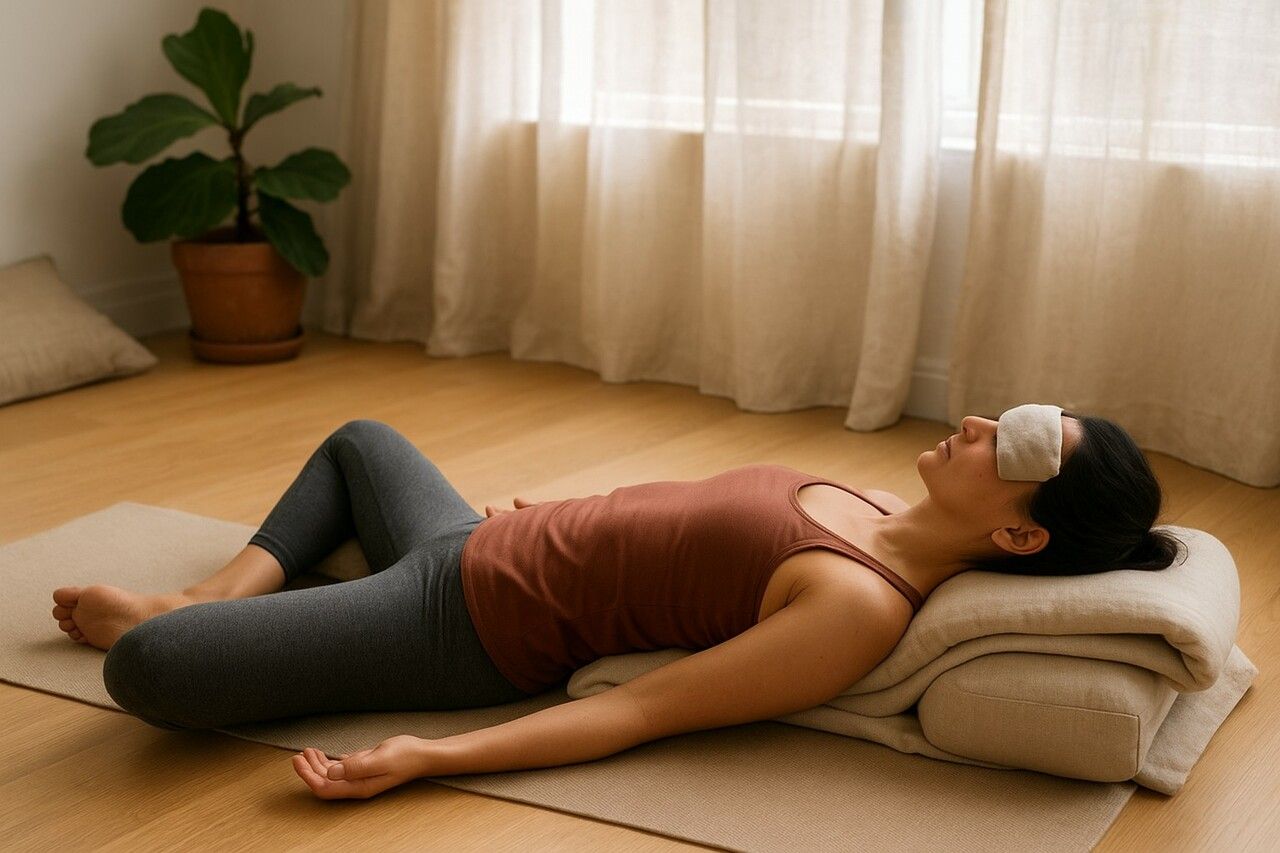
  • Start with the Right Knee: Lie on your back, bring your right knee in toward your chest, and guide it across your body to the left.
  • Keep Both Shoulders Grounded: Ensure your shoulders stay connected to the mat for a deeper spinal stretch.
  • Breathe Deeply: Focus on deep, even breaths to enhance relaxation and release tension.

Incorporating Supine Twist into your practice can leave you feeling refreshed, aligned, and at peace. By mindfully moving with intention—starting with the right knee—you’ll maximize the pose’s benefits for both body and soul.
by Blisstopia Retreats 6 April 2026
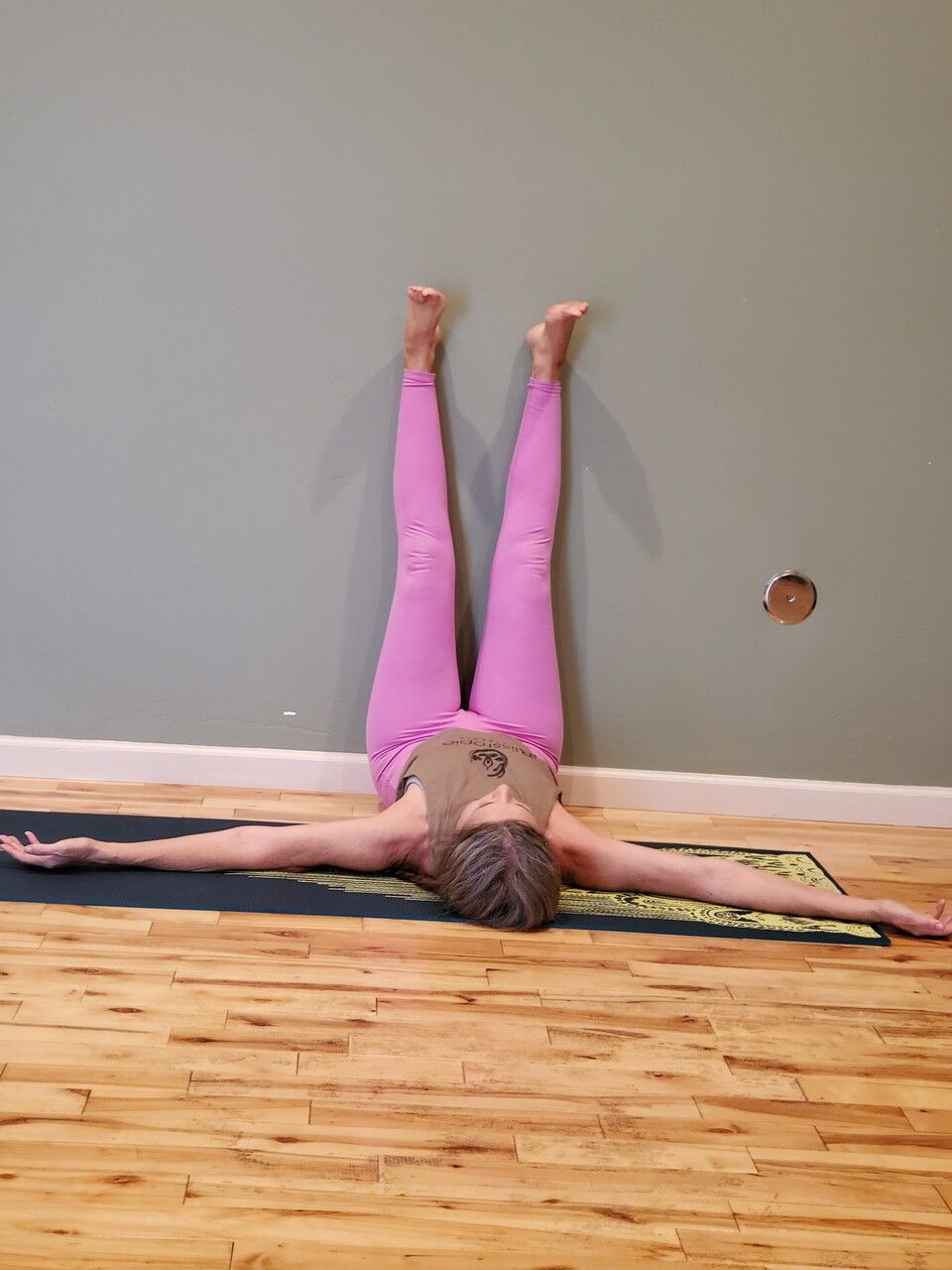
Sunday night’s Soulful Surrender class with Mark was one of those quiet but powerful reminders of why we practice at all—not for perfection, not for performance, but for the simple act of returning to ourselves. We began with the 4-7-8 breath, a pattern I’ve always deeply enjoyed. There’s something about the structure of it—the inhale, the pause, the long slow exhale—that feels like a conversation with the nervous system. The holds, the kumbhaka, felt especially grounding this time. In yoga, breath retention isn’t just a technique; it’s a space. A moment suspended between effort and release. Sitting there in the stillness of the holds, I could feel my mind soften and my body begin to settle, like sediment drifting to the bottom of a glass of water. From there, we transitioned into a gentle rhythm of five counts in, five counts out. This steady, even breathing created a quiet steadiness in the room. No striving, no pushing—just a simple, balanced flow. It felt less like doing a technique and more like remembering something ancient and natural within me. By the time we moved into legs up the wall, my body was starting to unwind in that familiar restorative way. My nervous system was calm, my breath was smooth, and I felt that subtle sense of spaciousness that comes when you allow yourself to slow down. And then… there it was. A nagging tension in my left shoulder, right around the rhomboid area. That kind of tension that doesn’t scream, but definitely whispers persistently enough to be noticed. I found myself thinking, ugh, I just want this to release. It’s funny how we can drop into such deep relaxation and still find these little pockets of resistance holding on, like they missed the memo that it’s safe to let go. I stayed with it. I breathed. I adjusted slightly, hoping for that satisfying melt that sometimes comes when a muscle finally gives in. It didn’t fully release in that moment, but what shifted was my relationship to it. Instead of fighting the tension, I began to observe it. There was a quiet lesson in that: surrender isn’t always about things disappearing—it’s often about softening our grip on needing them to. Somewhere in that stillness, another feeling bubbled up unexpectedly: pride. And I had to laugh at myself a little—like, wow, look at me, I actually took time for me. It sounds simple, almost silly, but as caregivers, guides, and busy humans, we know how easy it is to pour into everyone else while leaving our own cup running low. There I was, legs up the wall, shoulder slightly annoyed, and yet feeling this genuine warmth toward myself for showing up. For carving out that time. For choosing rest instead of another task, another responsibility, another excuse. That moment felt just as healing as the breathwork itself. Retreats, private sessions, yoga or breathwork sessions aren't always about dramatic breakthroughs every time. Sometimes it’s quieter than that. It’s the nervous system exhaling. It’s noticing where you’re still holding on. It’s allowing yourself to feel both the tension and the tenderness at the same time. Practicing with Mark reminded me how powerful it is to be held in a shared space of intention. There’s something about breathing together in a room—knowing others are also softening, also releasing, also navigating their own aches and emotions—that makes the experience deeper. More human. I left class not completely tension-free, but calmer, more present, and oddly proud of myself. And maybe that’s the real gift of these practices: they don’t just change our bodies in the moment—they reshape how we treat ourselves. Last night, I didn’t fix everything. I didn’t magically melt every knot away. But I listened. I paused. I breathed. And I showed up for myself. And honestly, that felt like enough.
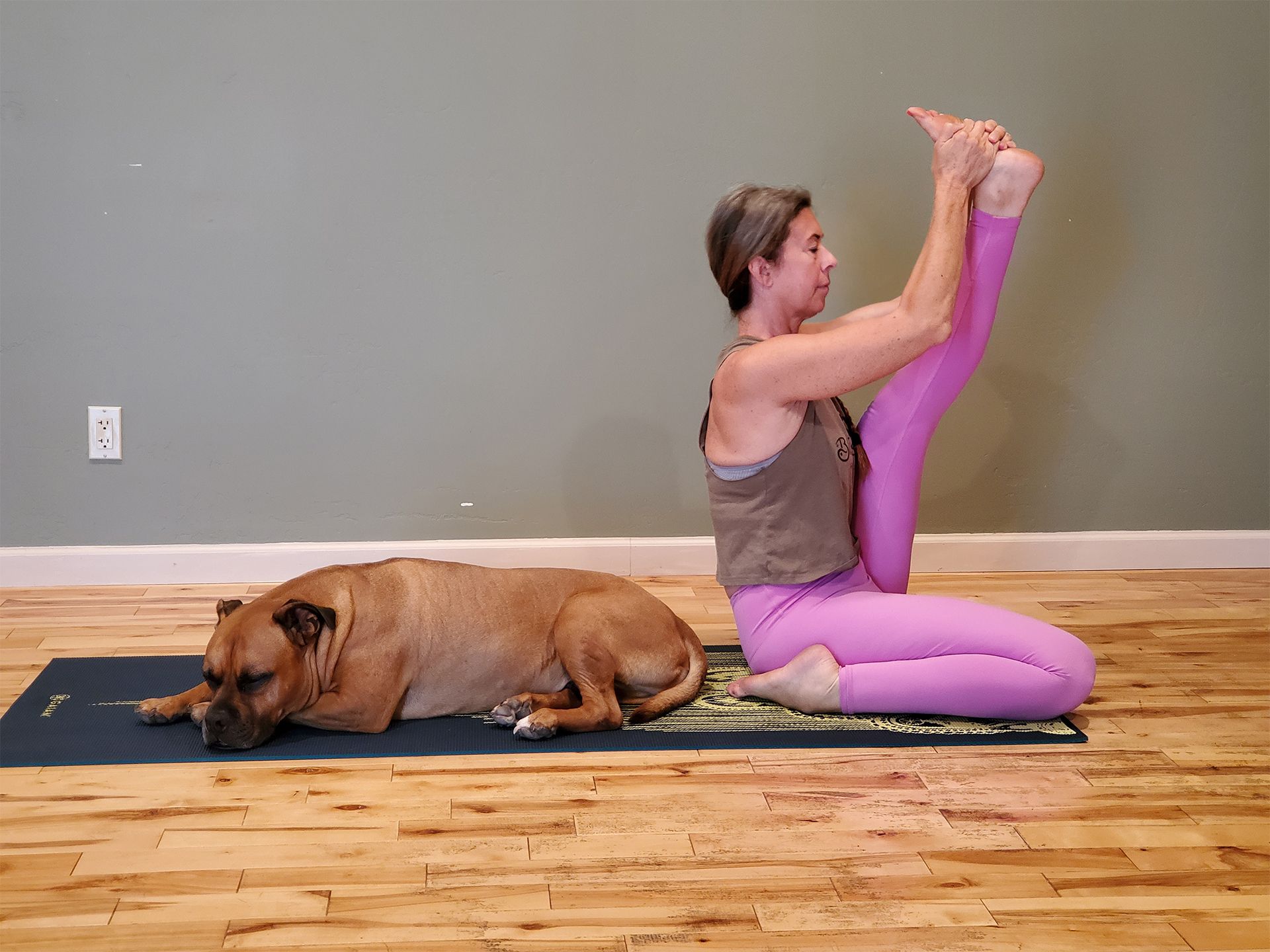
Woman doing yoga, leg raised, on a mat; dog lies beside her on the mat.
by Blisstopia Retreats 3 February 2026
There’s a little secret in yoga that most people never really talk about. It’s not the perfect pose, the Instagram-worthy arm balance, or how bendy you can get. Nope. The real magic happens when you slow down enough to Notice. Feel. And just Be.
Woman in yoga pose outdoors, mouth open, dog at left.
by Blisstopia Retreats 28 January 2026
Today I turn 58… and what better way to celebrate than by honoring the wisdom, freedom, and power of the crone within each of us? Take this quick quiz and see how your inner wisdom is showing up!
by Blisstopia Retreats 3 December 2025
No one talks about how hard it is… so let’s talk about it.
by Blisstopia Retreats 16 September 2025
II can still remember when I first started practicing yoga, lying in savasana and wondering, Am I doing this right? My mind would race. My body would fidget. And when the teacher invited us to roll to one side, I didn’t know if it mattered—or why.
by Blisstopia Retreats 11 September 2025
You are not your fear. You are not your anxiety. You are the stillness beneath it all.